There is so, SO, little written on sex when trying to conceive. In particular, if you've been trying for a while or struggling with fertility. Sex can lead to burnout, exhaustion, frustration and distress.
Desire can wilter and frustration can arise.
I know this post is easier said than done, but if you can find small ways of easing the already overwhelming time, the better: Talk with each other and to each other, find intimacy and moments of closeness outside the bedroom, bring new things in as often as you can, and be tender with yourselves.
I do want to add one thing to clarify! On the slide regarding saliva, you can absolutely have oral, just don't use it as lube!
*slides can be found on Instagram
Self-confrontation and self-regulation are absolute KEYS in having healthy relationships. Knowing when we are projecting our own issues and displacing what is happening internally, rather than onto our partner. Recognising that sometimes when we are pointing at them, our three fingers pointing back at us may also need to be investigated. It is our job to manage our own emotions.
To know what is ours to own and face it. Then redirect ourselves, apologise if needed, and do what is helpful to soothe ourselves.
Image Based Sexual Abuse has severe and long-lasting effects on mental health and catastrophic consequences to daily living. This is amplified when there is no law protecting the victim. (Bates, 2016; Cecil, 2014).
These stats and referencing are from a report that I wrote, IBSA shouldn’t need the back up of studies, using empathy and common sense should be able to give an insight into the severe effects for victims. But we haven’t got legislation, and one way to gain traction is by demonstrating through reports (unfortunately when it comes to law and the government, empathy won’t suffice).
We must produce legislation which creates a safe environment for victims to come forward, to be confident in the Gardaí, and to prosecute the perpetrators of this crime. Otherwise with the digital age being ever-present and technology on the rise, this crime will expand and unless we protect the public; mental health issues and suicide will increase.
Finally I am so eternally grateful for the incredible hard work Irish women are doing including @meganjrenee
@drcarolinewest @kneevo @emconcannon
Today I found a research paper on shame. It discussed how children prone to feelings of shame in childhood were more likely – years later – to engage in a range of risky behaviours (whereas the propensity to experience guilt about specific behaviours appears to be a protective factor. BUT that's for another post!) Shame is a painful, self-conscious emotion. Feeling shame, means you're feeling that your whole self is wrong.
Shame keeps us in the same pattern of behaviour that is entrenched in self-flagellation. And in order to escape shame's self-diminishing effects, expressing contempt or criticism toward another person, or shaming them, re-locates one's own shame in the other. With that in mind, the emotion can be passed from generation to generation. Children behave in ways that make them culpable for the shame that belongs to their parents. The risky behaviour outlined in that paper (and many others) is self-destructive behaviour.
However, there is a way out. Firstly; shame means different things to different people. It is still a universal emotion but it manifests in different ways for most of us: It can be presented in comparison to others, perfectionism, criticism or perceived failure. Try gage when your shame feels triggered and how it physically manifests. Secondly; be mindful of what you do with it, especially around children. Finally, meet it instead with self-compassion. Kindness and self-care can go a long way to combating shame.
A small post on a form of gynaecological cancer rarely spoken about. Vulva cancer is rare in people under the age of 50 and those who have not experienced menopause. There are over 1000 cases a year in the UK with 80% being in those over the age of 60. This does not mean that if you are experiencing any of the symptoms, or concerns below, you shouldn't go to your GP.
But firstly, what does the vulva include? :
the Bartholin's glands which are 2 small glands each side of the vagina
the lips surrounding the vagina (labia minora and labia majora)
the clitoris
Symptoms can be:
a lump or a wart on the vulva
persistent itch or/and tenderness of the vulva
an open sore on the vulva
pain when urinating
raised patches of skin; they can be red or white
Depending on the presentation or certain factors, vulva cancer can be treated by surgery, radiotherapy and chemotherapy or a combination of all three. There are lots of other signs, symptoms and risk factors for vulvar cancer. For more information, you and guidance @eveappeal has wonderful advice on their website.
Remember, if you are at all worried, ask your GP to refer you to a Gynaecologist.
This is a great little tool to stop yourself from getting caught up on expounding yourself as emotion, to help halt a sense of permanency. Your feelings are absolutely important and valid, however they are not your entity. Changing phrases can actually be a very powerful shift in your brain; it stops a neuropathway being created that gives the emotion power to become an identity. It also facilitates the ability to take back control. Sitting with and being in emotions is incredibly important, but be careful not to submerge and loose yourself in a label.
So if you feel yourself getting overwhelmed, check the language your using and see if you can alter it with this exercise, while still not minimizing your experience.
If I can recommend anything to watch on Netflix and I can recommend a lot! Nanette by Hannah Gadsby is sitting at the top spot. Her ability to incorporate humour into a beautiful monologue about; trauma, internalized homophobia, misogyny, self-worth, mental health etc... is incredible. It's witty, intelligent, thought-provoking and relevant.
This quote in the picture is one of my favourites. One of the most prominent themes in our culture is the need to be right. It's something I work with regularly with couples in conflict. It erodes our ability to listen, reflect and learn. It is so deeply embedded in our culture, belief system and in the collective psyche that we never even pause to consider it. It would really serve us to inquire why it is more compelling to be right than to listen to others? Why is it more important to hold on to our pride than to show compassion? Why is it more important to hold onto our judgement than to learn? "We could paint a better world if we learnt to see it from all perspectives. Diversity is strength, difference is a teacher. Fear difference you learn nothing.
If you treat sex as a discovery of yourself and your partner you can you can dive into a layer of unknown intimacy previously veiled by the goal of orgasms! We often think that climaxing is the holy grail, however when we take orgasms off the table, anxiety can decrease and pleasure can increase. If the objective is to enjoy yourself rather than reaching a crescendo, you can begin to uncover aspects of yourself that were shrouded by performance.
If you wouldn’t say it to a friend, why would you say it to yourself? This is my question to you today: Why would you? We tend to talk about self-care in the context of actions and behaviours. We don't talk enough about the language that we use and the internal dialogue (or narrative) we subject ourselves to.
The critical inner voice is a well-integrated pattern of destructive thoughts. It is an internal enemy that utilises negative thoughts, biases and beliefs against you. As a result the voice impacts on your confidence and self-esteem. So perhaps a form of self care this week could be challenging that inner critic. You can do so by : 1. Noticing the words, attitude AND TONE that you use towards yourself. 2. Challenging them, ask yourself; "if this happened to (insert friend/relative) what would I say to them?" 3. Ask yourself why you're not saying those (presumably lovely!) things. 4. Say those (presumably lovely!) things to yourself. Challenging yourself is actually cathartic, therapeutic and a great form of selfcare.
How we think and what we do with our thoughts has a huge impact on our sex lives.
We can utilise our thoughts to elicit psychological arousal while simultaneously our thoughts can infiltrate our mind putting a halt on connection. Research on distraction, focus and performance thoughts has been conducted over the last two decades. Back in 1976 two researchers; Geer and Fuhr wrote about the role of distraction on our sex lives.
We can use our thoughts to tap into fantasies and connect with our partners (or ourselves!) But equally our thoughts can come marching into our minds lecturing us on "shoulds", expectations or our negative thoughts around our bodies.
Failure and disengagement thoughts being the most common: "I'm not getting turned on", "why isn't this working" being examples, irrespective of gender (Nobre and Pinto-Gouveia, 2008) With these thoughts, trying to engage sexually feels like an impasse.
How do we tackle these challenging thoughts know? We know from the collosal amount of research on it, thought suppression doesn't work.
*Instead using mindfulness as a tool to learn to meet these thoughts without judgement or jumping on the back of them and being taken off with.
*Working on positive affirmations around our bodies and genitals.
*Lots of self-compassion and patience.
*Alongside challenging some of those negative beliefs around ourselves.
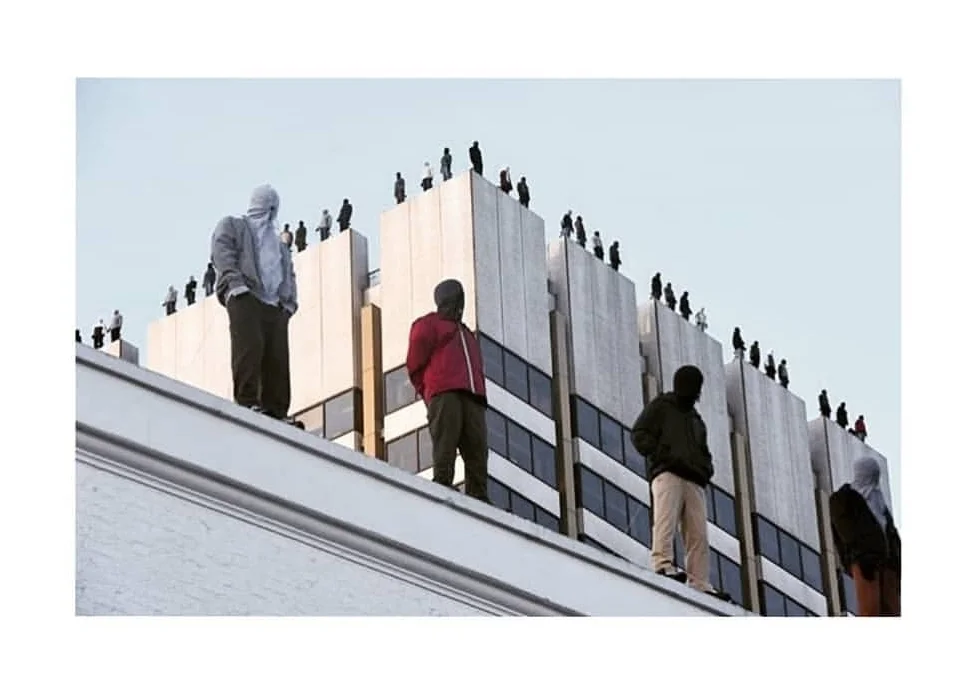
Every week in the UK 84 men take their life by suicide, one man every two hours. Suicide is the biggest killer of men under the age of 45.
Support @calmzone new campaign #project84 they partnered with the internationally renowned artist, Mark Jenkins, and his collaborator Sandra Fernandez, to create 84 individual sculptures. Friends and family members of the deceased helped in the creation process of the figures. Each one, a poignant reminder of a real life lost and a call to society to come together and ultimately take a stand against male suicide.Visit the sculptures on London's Southbank Promenade from 26th March or alternatively head to their website to read some of the stories of these men as told by family and friends.
As a Therapist with a Therapist I can honestly say, that attending sessions is brave. Opening up to a stranger and telling them your innermost painful experiences, thoughts, and feelings?
So incredibly valiant.
Remind yourself of that.
If you are thinking of starting therapy/counselling I'm in awe of you. It's so gutsy and you can absolutely do it.
The definition of intersectional is: "the interconnected nature of social categorizations such as race, class, and gender as they apply to a given individual or group, regarded as creating overlapping and interdependent systems of discrimination or disadvantage."
While sex-positive is described as: "having or promoting an open, tolerant, or progressive attitude towards sex and sexuality."
To me, it's about celebrating diverse sexual expressions, practices, and identities.
Understanding that our experiences are individual and multifaceted and to be aware of our biases, views and backgrounds.
Intersectional and sex-positivity, need to be one and the same. We can't and shouldn't have one without the other.
Intersectionality is wildly omitted from much of psychology and psychiatry and there is a long way to go.
As over 600,000 people have missed their smears since lockdown, and 22% saying they would be less likely to attend, @misspap have decided to use their name for good to hopefully change that number! They have designed a set of underwear that pops off at your vulva so your smear can be carried out with a lot more ease, speed and comfort.
100% of the proceeds go to @eveappeal
I am grateful to hear a company using their name for good with the aim to ease anxiety and stigma. While normalising and creating change surrounding smear tests.
Teamwork is vital in relationships, whether it's work, family or friends. It's all about give and take. Most of us have probably been on a team one way or another; being kids on sports teams to our present work teams. However, in intimate relationships we often push back against our partner rather than collaborating, we tend, instead to be focused more on 'my' needs than 'our' needs.
Teamwork requires you to be unselfish and responsive to your spouse’s needs by collaborating, listening and encouraging. True teamwork can bring about a bountiful partnership. It allows you to grow as a person, and as a couple. Take a minute and ask yourself, what are some changes you need to make so ensure that you and your partner operate as a team?
What causes Erectile Dysfunction? Many people, on occasion will struggle to get or maintain an erection. There are numerous reasons for this, ranging from; stress, tiredness, anxiety (particularly around performance) or too much alcohol. If it happens more often and causing you upset, seek support.
In the first instance I encourage people to attend their GP. Get a full blood test and a physical test carried out. This is to rule out any physiological aspects. Irrespective of the results, Sex Therapists are full qualified to assist you through talking therapy alongside exercises that can be done at home. Erectile issues are nothing to worry or be embarrassed about.
Some #sexeducation for this Friday evening. With #vulvodynia being the todays topic. Vulvodynia means ongoing pain in the vulva when there is nothing abnormal to see and no known cause for the pain. Whether it is generalised or localised, may be described as provoked, in other words touched, or spontaneous (occurring without touch as a trigger). Many conditions affecting the vulva can be painful (e.g. infections such as thrush or herpes, or eczema). In vulvodynia, pain is felt in the vulva when there is no obvious visible cause for it and other diagnoses have been ruled out by examination and investigation.There is also localised vulvodynia (also known as Vestibulodynia) which is a term used for pain arising at the entrance of the vagina. This is when any pressure, (touch or friction) is applied. Vulvodynia is not only physically painful but it can disrupt and unhinge intimate relationships and take and emotional and mental toll. In my next post I will be talking about treatment methods for vulvodynia.
Projection is a subconscious defence mechanism. It's the tendency to disown the qualities we don’t like about ourselves and attributing them to others. It happens in relationships when we blame others for old or present hurts. Projection holds power when we have the inability to see it. Especially, if there is a high level of intensity, it creates a strong urge to blame.
In relationships, projection hurts our partners by casting them into a false role, and placing your feelings onto them. Its power lies in our inability to see it. Identifying and communicating that your responses are a projection of past relationship incidences, childhood experiences or your own personal issues, is an incredibly courageous act. It provides insight that may be needed to stop your relationship becoming stuck. Projection keeps us from understanding the true source of our pain and being able to tackle it. Blaming your partner keeps you from discovering your part in the dynamic, and it results in an entanglement. To tackle your projections this first thing I suggest is; when you get triggered, stay with the feelings. Secondly try to ask yourself (in regards to emotions or negative thoughts); "who owns this? Is it mine? Or is it theirs?" This can help give a hand to identifying if this is a projection or the reality. Owning and communicating them is brave and courageous.
Movies, TV shows and magazines perpetuate the myth of what being 'good in bed'* means. This burrows into our psyche and puts an incredible amount of pressure on (particularly young) people.
When I wrote this quote I decided to google; 'good in bed'...... I sat with my head in my hands for a while!So I thought I would try bust some of the myths.
What does being 'good in bed' mean?
1. Feeling comfortable with your body, including your genitals. This, hopefully, allows you to feel more relaxed and free.
2. Understanding what you enjoy. Therefore being able to communicate them to your partner so that you can both benefit.
3. Learn about what your partner enjoys.
4. Sexual give and take! It's not all about one person.
5. Being respectful. Accepting someones dislikes, or likes without being hurtful or shaming.
What does being 'good in bed' NOT mean?
1. Needing a 'perfect' (whatever that means!) body/looks and youth.
2. Knowing every trick and applying them at every opportunity. This reduces sex to a technique.
3. Lots of past sexual experiences. This may help with your own experience, but everyone is different. What worked with one person, may not work with another.
4. High sex drive and/or ability to last. These factors don't give sensitivity or knowledge and are part of myths that have perpetuated for years.
5. Not being respectful. You should probably remove yourself from the bed.
Sexual responses, desires and fantasies are unique and complicated. Assuming someone 'should' know yours, or that you will know theirs probably won't make it very satisfying. Understanding yourself, body, needs and desires alongside your sexual partners. Can ultimately facilitate a satisfying sex life. Being 'good in bed' does not happen like osmosis and takes; consideration, communication and self-understanding. Feel free to add anything I have missed in the comments below!
▪▪
*I also think we need to get rid of the phrase 'good in bed'! Don't take my using it as an endorsement! Rather an aid to bust myths!
Second part of my posts on #vulvodynia focusing on #treatmentmethods. From my experience and research, the multi-disciplinary approach is the best method. No single treatment is appropriate for individuals with vulvodynia and it may take some time to find a treatment, or combination of treatments, that helps alleviate pain.Some people experience relief with one particular treatment, while others do not respond or experience side effects. So finding out what works best for you is of upmost importance!
Firstly I would recommend a Psychosexual Therapist. We are trained to support you as an individual or perhaps as a couple. Receiving a diagnosis of vulvodynia or experiencing it, tends to affect a woman’s sexual relationships and emotional well-being.
Alongside this vulvodynia treatment may involve visiting a: •gynecologist or vulvovaginal specialist, •dermatologist, •physical therapist.
Current vulvodynia treatments include: ○Medications •Antidepressants ( both SSRIs and Tricyclic) •Anticonvulsians ○ Topical Medications (gels and creams) •Topical Hormonal Creams (e.g., estrogen, testosterone) •Topical Anesthetics •Topical Compounded Formulations (eg; anti-depressants) ○Other treatment options: •Nerve Blocks •Neurostimulation and Spinal Infusion Pump •There may also be some complementary or alternative medicine that would suit you. •Women with provoked vestibulodynia may be candidates for surgery. Success rates for surgery vary from 60% – 90%. Following a diagnosis, take your time finding what suits you for treatment options. We are all different which means what works for one person, may not for the other. Ensure that you have someone to talk to, be it a loved one or a health care professional so that you feel supported.