Recently I have found myself thinking a lot about forgiveness. Partly because of articles I am writing about trauma and partly due to research I have been doing on culture and religion. Forgiveness is intertwined in most religions and indicates holding power.
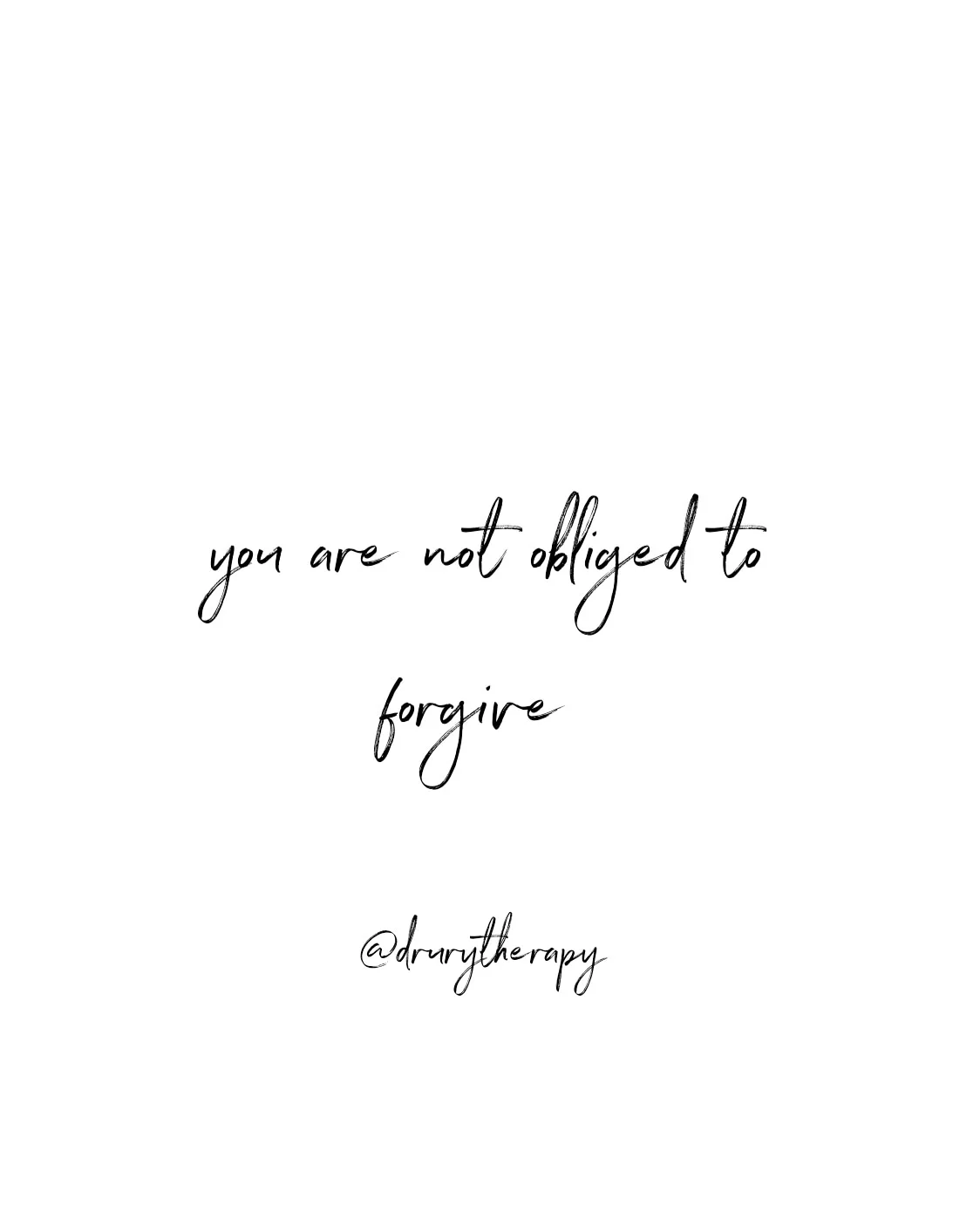
There is this idea that in order to move forward, we must forgive. That with forgiveness we will find true happiness and freedom. I don't believe this is the case. I am not talking about disagreements or arguments that are had between couples or family members. It's those who have experienced trauma or abuse at the hands of others, individuals who walk into my clinic room, holding pain and suffering. Although the idea of forgiveness seems simple, it can be very emotionally loaded and complex, particularly for trauma survivors.
I understand, of course, that if a person comes in and finds that the word “forgiveness” resonates, I do not discourage it. Forgiveness is highly personal and individual. You do not need to forgive so you can move on, instead move on in the right way for you.
Trust is a necessity to any healthy relationship. Anytime we treat someone as if they don’t matter, they are going to feel some kind of betrayal. Trust, not mistrust, is our default mode as individuals. It’s our experiences that impact our faith in others. When entering into, or maintaining a long-distant relationship, issues around trust can be enlarged. Therefore, it’s important to reflect back on your previous experiences with trust. Intimate, friendships and parental relationships can have impacted your belief in others. First and foremost, when you experience a pang of distrust, ask yourself; ‘is this true?’ Now, I know what you may be thinking-that it FEELS true, but that doesn’t mean it really is. Sometimes it’s past experiences or traumas coming back to haunt us. This is called projections. The displacement of past experiences on the present and individuals in it. Try to decipher whether they’re historical feelings bubbling up, or actually you have legitimate reasons to be concerned. Which leads me to my next paragraph on communication.
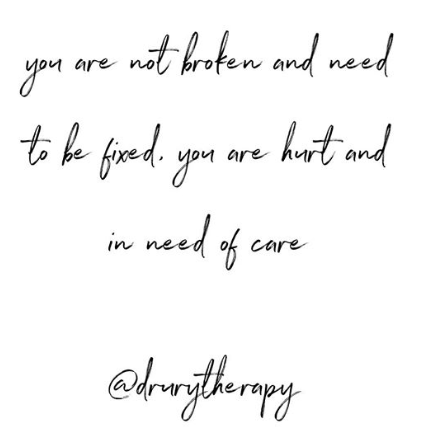
"They are damaged", "I'm messed up", "there is something wrong with me"; are just some of the sentences I hear regularly. Mental illness, trauma, a dysfunction, a break up...whatever is causing you pain, does not equate to being broken. The language that we use towards ourselves and others perpetuate stigma and shame. So choose your words carefully. And give yourself/that person; time, patience and compassion instead. Which are vital ingredients to facilitate healing.
Being stuck in the Drama Triangle can be exhausting-breaking the cycle of 'blame and complain' is no easy feat. But using a sentence like this facilitates change-it stops both parties being caught up in the rut. It opens up the possibility of effective communication and encourages you both to step out of the emotional brain and into the rational one.
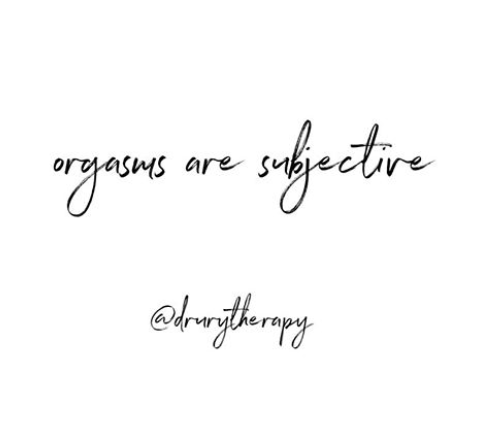
No two orgasms are alike, everyone experiences them differently. They can change over time and are influenced by context. Orgasms are personal and individual and come (pun totally intended) in many forms
Here are a few:
•Blended orgasms (variety of different orgasms blended together)
•Relaxation orgasms (through deep relaxation techniques)
•Pressure orgasms (through indirect stimulation and pressure)
•Multiple orgasms (one after another or with a break in between)
•Finally another to mention is orgasmic anhedonia (also called pleasure dissociative orgasmic dysfunction) A dysfunction that is rarely mentioned.
This is when someone is unable to feel pleasure when they climax (men still ejaculate)
It is believed that it can be as a result of Spinal cord injury, ME, depression or issues with dopamine and testosterone levels.
Ultimately orgasms are not a 'one size fits all', they don't have to replicate the famous; When Harry Met Sally scene and can change and vary over time.
All couples fight, but those who fight fair are the ones who tend to stick together. Criticism often presents in the therapy room with couples. More often than not resentment has built up and criticism becomes child play "they never ", "she always" are some of the sweeping statements that become thrown around habitually.
Criticism can increase the likelihood of your partner becoming defensive* and there is also a possibility of it spiralling into contempt*
If you are noticing this style of communicating increasing in your discussions, act now to learn safer and more effective ways to talk about your differences . There’s nothing wrong with voicing concerns and complaints in a relationship, but try to do so in a way that focuses on your own feelings and how your partners behaviour affects you. Try to find constructive solutions to aid you achieve mutual fulfilment. "I" statements are a great starting point. Try swapping the blame with "I feel" or "I wish". Another thing to do is try to identify whether or not the generalisations are true, it is quite common that they are in fact statements from a place of anger or hurt. If it's the case that comments arise from your own feelings, tap into that and try to understand why. Then perhaps you will be able to articulate in a manner that may lead you to be heard. *Contempt, defensiveness and criticism are 3 of 4 of John Gottman's The Four Horsemen of the Apocalypse (stonewalling is the fourth). These 4 categories of behaviour were found to be the main reasons for marriages ending in divorce. Criticism paves the way for the other 3.
Just because your erection is not hard as steel, doesn't mean you can't have a sizzling sex life. Not to mention that; to have a happy, healthy sex life, you don't need to have penetration. Sex is whatever you want it to be.
TRIGGER WARNING: Stealthing/rape- Two nights ago I asked women to anonymously share times, they had experienced stealthing. An act described as “the practice of one sex partner covertly removing a condom, when sexual consent has only been given by the other sex partner for condom-protected safer sex.” - If you consent to having safe sex and someone you’re intimate with violates what you have only consented to, it is rape. You are a rapist. People still have this idea that someone who rapes is this dodgy looking guy at the bottom of an alley way waiting around during midnight. It isn’t. A guy who slips off a condom without your knowledge is also a rapist. Many people who wrote in or commented on the thread I compiled admitted that they didn’t know there was a name for it (stealthing) and that’s because some don’t recognise it as being dangerous. If a woman consents to safe sex, you respect her wishes instead of risking her sexual health (exposing her to STI’s and unwanted pregnancies) because “it doesn’t feel great” - do not cross her boundaries for your pleasure. To the women who wrote in, thank you for sharing your experiences with me. You didn’t have to, but chose to, allowing me to bring more awareness. If you ever go through this, please contact a rape crisis centre who will be able to try and support you.
Passive aggressive behaviour takes many forms. Most of us know it by the obvious signs; verbal low-level attacks (criticism, snide comments etc) or indirect behaviours (slamming doors, stomping around). But passive aggressive behaviour may not always be conscious for example; procrastinating or avoiding (eg; being late), chronic forgetting, self-pity, withholding (actions such as sex, or even making a cup of tea), learned helplessness and shifting blame. Ultimately; passive aggressive behaviour is a way of expressing anger covertly or indirectly. This way of resolving issues seems almost unnoticeable. Passive aggressiveness can appear low-key, making it can difficult to identify and admit to. It can push people way with the slow drip-feeding of negativity. In order to change your behaviour, firstly, it's important to connect with the emotion. Often with PA behaviour it stems from not having a good understanding of why you are angry. Before you start addressing your actions start paying attention to what is triggering you. Then give yourself time to make the needed changes, showing yourself compassion as you do. Finally; practice! Practice how to assert yourself before you do, this will hopefully help you feel more confident.
"If we are comfortable enough to undress in front of our beauticians, why are so many of us still too embarrassed to take a potentially life-saving test?" Cervical screening is a at a 20 year low with two lives lost to cervical cancer every day.
Treatwell and Public Health England have teamed up to try and encourage people to attend their screenings through #lifesavingwax . Campaigning in salons through these leaflets to encourage change and conversation.
We take care of our appearance everyday-what about our health?
OXYTOCIN!! You may know it as the 'Love hormone'. It is a neurotransmitter and is produced in the hypothalamus (which sits in the base of the brain). It is my favourite hormone as it brings so much good; it’s even released during childbirth and breastfeeding. Building empathy and trust in relationships. To....of course....being released through sexual activity and orgasms! One way of doing thanks through nipple play. That is for people of all genders! Though women tend to have a higher level. If you're with a partner and seeing a positive physiological and emotional reaction, you are getting that oxytocin moving from their hypothalamus into their blood stream!
"Sometimes I think people interpret those as vagina pants, they call them vulva pants, they call them flowers, but it just represents some parts of some women. There are some women in the video that do not have on the pants, because I don't believe that all women need to possess a vagina to be a woman." Janelle Monae
Walking past the bridge I discovered this beautiful tribute to someone who was clearly adored. Struggling with mental health issues can feel terrifying and isolating. Most of us have either lost someone or known of someone who have ended their lives, or perhaps have contemplated ourselves. It's imperative that we keep the dialogue open, that we challenge stigmas and show compassion. If you are struggling with suicidal thoughts @samaritanscharity always has a phone line open (please see my highlights or swipe on this image). Holly's friends and family have done an amazing job raising awareness of the importance of talking in Holly's memory. Nobody is immune to the veil of darkness that is depression. Please know that you are not alone, you are important and it's ok not to be ok.
I have saved so many posts by @theequalityinstitute with the aim of posting them, but I can never decide which one!! They are all vital and powerful. I decided to choose this one for today because I believe that there still much more work to do around debunking stigma around Feminism. Feminism is about equality for ALL womxn. Feminism needs to be intersectional. It is important to to know that intersectional feminism points out that there are multi-layered facets in life that womxn of all backgrounds face.
The whole purpose of intersectional feminism is to listen to different kinds of feminists, not just ones like yourself. In other words; if you don't stand for all womxns rights , you don't stand for any
When we’re masturbating, our perception of what is sexually attractive and desirable changes. This all happens through my favourite part of the brain: The Prefrontal Cortex. Its the part of the brain that focuses on personality and creativity. Research has found that heightened sexual arousal achieved through masturbation can make almost anything and anyone seem more sexually appealing. Interestingly enough, these findings tell us that sexual arousal changes our perceptions of the world around us. Which is pretty crazy!
All too often I hear women talking about how to wash their vagina and I explain that it is actually self-cleaning! That soaps, gels and wipes can throw off the PH balance and cause thrush or other bacterial infections. Warm water will do just fine!
My lovely, talented friend @yattire has started up sound bath classes. I have been blessed enough to experience it!
Sound Baths are incredibly relaxing and beneficial to mental health. Researchers have found that sound waves can reduce blood pressure as well as enhance sleep and memory. Binaural beats, tones played simultaneously that are close in pitch but not identical, can be found in a sound bath session. Studies show these sounds can reduce anxiety and enhance mood states. Sound has been found to be a useful “brain exerciser”, helping to improve cognitive functioning and help with mental and emotional health.
I would really recommend having a go if you want a change to mindfulness and experience an escapism that can help heal you at the same time.
Loss of desire, also known as low libido. Can affect women at certain times of life.
There are many obvious times such as during pregnancy, after having a baby, during menopause. However some women experience most of the time.
Low libido can have a range of physical or psychological causes, including:
*Stress
*Depression
*Excessive drug use or alcohol.
*Medication side effects
*Hormone issues (drop in testosterone)
*Relationship issues
And many more reasons. If you are struggling with low libido it is worth visiting your GP in the first instance. They can assess for any physiological aspects. If ruled out sex therapy can help assist you in reconnecting with your sexuality and help with any relational issues.
We all know the "New Year, New Me" phrase that is thrown around regularly this time of the year. We set high expectations for ourselves and attempt to change those pesky "flaws" that we see.
Many of our resolutions actually re-enforce most of the negative conceptions we already have and guilt begins to flourish when the resolutions fall through.
Instead, why not allow this year to be the one when you put your own needs first, to honour where you are and what you've accomplished no matter what.
Can you make this the year of asking for help and allowing yourself to accept support? To be guilt free and self compassionate?
Life is too short and too uncertain to spend it surrounded by things that drain you. Perhaps 2019 can be about taking stock of what and who feed your soul and get more of it!
Eating disorders.
I have worked extensively with those suffering with eating disorders in the past, and I know that Christmas time can be the most challenging time of year. It’s incredibly difficult to get away from food, alongside comments that people may make and the pressure to be 'festive' around food. Christmas is a time that the eating disorder thoughts and feelings are trying to battle and punish you. It wants you to feel anxious and afraid so that you will want to stick to the routines and rules even more. So, planning in advance can put the power back in your hands.
· First things first: Be aware of your inner critic and negative comments. If you are feeling overwhelmed, don’t be hard on yourself. Ask yourself, ‘what do I need to do to make my Christmas day enjoyable and not make me panic?’
· Planning Christmas dinner in advance. This may range from portions sizes, distractions after dinner (if purging is something that happens for you), serving yourself/serving away from the table.
· Understanding who may be there on Christmas day may assist also, in which case you could do a seating plan so you’re not sitting beside the family gossip!
· Hopefully you have a loved one who you can talk to about what is worrying you most about this time of the year and can perhaps assist you. Asking them to tell family/friends not to comment on weight or appearance, developing a little signal between the two of you for when things become too much, explaining to them what your triggers may be and what coping mechanisms may help.
· SEED has some great downloads that may be of use to you, or family members on their website.
· BEAT have their helpline open over Christmas